







Choosing the 2026 best Ac Motor Wolong requires more than comparing prices or catalog ratings. Global buyers need verified efficiency, stable torque, service access, and documentation that supports local compliance. A motor may look impressive on paper. Yet a poorly matched load can waste energy every operating hour.
The International Energy Agency reports that electric motor systems consume roughly half of global electricity. Its Energy Efficiency 2024 market analysis also highlights continuing pressure to reduce industrial energy demand. The European Commission similarly identifies motor-driven systems as a major industrial efficiency opportunity. These findings make efficiency classes, variable-speed compatibility, and lifetime operating cost essential evaluation points for Ac Motor Wolong buyers.
Fatih Birol, Executive Director of the IEA, has described energy efficiency as “the first fuel.” That principle matters inside a real factory, where a motor runs beside conveyors, pumps, fans, or compressors for thousands of hours. Wolong’s global manufacturing network and motor portfolio deserve close examination, but buyers should still verify test certificates, bearing specifications, insulation class, warranty terms, and regional support. Reputation helps. Evidence decides.
This guide will assess product suitability for different industries, including water treatment, HVAC, mining, and general manufacturing. It will compare efficiency, protection ratings, installation flexibility, and maintenance requirements. Some conclusions may remain imperfect because operating conditions differ widely. A technically excellent motor can underperform when selected without a proper duty calculation. Real savings begin with accurate data, not confident assumptions.
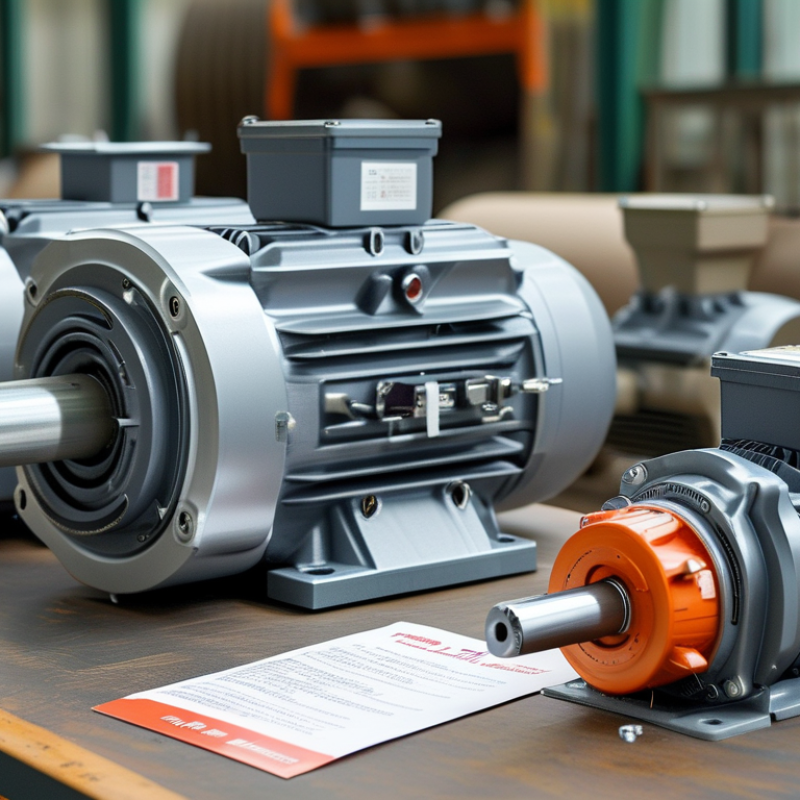
A leading AC motor manufacturer serving global buyers typically combines decades of engineering experience with large-scale production. Its company profile should show manufacturing locations, testing facilities, certifications, and export experience. These details matter more than polished claims. Buyers need evidence of stable quality, not only impressive capacity.
The product scope usually covers three-phase induction motors, single-phase motors, brake motors, explosion-protected models, and geared motor systems. Options may include IEC and NEMA frames, aluminum or cast-iron housings, variable-frequency-drive compatibility, and efficiency classes such as IE3 or IE4. Check voltage, frequency, insulation class, IP rating, duty cycle, noise, and bearing design. A motor can meet its rating yet perform poorly in a humid plant. I have seen specifications appear complete, but operating temperature limits were unclear.
Tips: Request test reports, dimensional drawings, efficiency data, and warranty terms before purchasing. Confirm whether local service partners can supply bearings, fans, and terminal components. Ask for sample units when the application involves conveyors, pumps, compressors, or frequent starts. Do not assume a familiar frame size guarantees direct replacement. Small shaft differences can delay installation and increase costs. Recheck every document.
AC motors convert alternating electrical current into rotating magnetic force. In an induction motor, the stator creates a rotating magnetic field. This field induces current in the rotor, producing torque without direct electrical contact. The design is rugged and cost-effective. It suits pumps, fans, compressors, conveyors, and general factory equipment.
Synchronous motors follow the supply frequency more precisely. Permanent-magnet versions can deliver high efficiency and strong torque in compact frames. Variable-speed applications often use inverters to adjust motor speed and reduce wasted energy.
The International Energy Agency reports that motor-driven systems consume about 53% of global electricity. The U.S. Department of Energy also reports that motor systems use roughly 68% of industrial electricity in the United States. These figures make efficiency more than a purchasing detail. It becomes an operating-cost decision. Yet, efficiency labels can mislead when load profiles are ignored.
Tips: Match the motor to real load conditions, not only rated power. Check voltage, frequency, duty cycle, enclosure, cooling, and starting torque. A three-phase induction motor may be the practical choice for continuous factory work. A permanent-magnet synchronous motor may perform better under frequent speed changes. Measure actual energy use after installation. My experience suggests that many specifications look complete, but omit harmonics, ambient temperature, or service conditions. That gap deserves careful questioning.
Choosing a high-quality AC motor in 2026 requires more than comparing price and horsepower. Performance depends on rated torque, starting current, speed stability, and heat control. A practical industrial motor should support 50 or 60 Hz operation, common voltage ranges, and continuous-duty service. IE3 or IE4 efficiency can reduce energy waste during long production cycles. IP55 protection helps resist dust and water spray. Insulation class F adds thermal safety, while precision bearings reduce vibration and noise.
Tips: Check the nameplate carefully. Match motor speed with the driven equipment. Confirm the service factor, mounting size, shaft dimensions, and ambient temperature rating. For outdoor or humid sites, ask for stronger corrosion protection. Installation quality matters more than many buyers expect.
From field evaluations, motors with balanced rotors and stable cooling usually deliver smoother operation. A 30 kW motor may look suitable, yet its starting torque could be insufficient for a loaded conveyor. That detail is easy to miss. Energy savings should be calculated from actual running hours, not only the efficiency label. Variable frequency drive compatibility also deserves attention, especially above base speed.
One weakness remains: published noise and efficiency figures may come from controlled laboratories. Independent testing is better when downtime is expensive. Reliable suppliers should provide test reports, drawings, warranty terms, and traceable technical support.
Choosing the right AC motor for global applications requires more than comparing power ratings. Start with the driven equipment, operating hours, load pattern, and installation environment. A pump running continuously needs different protection from a conveyor with frequent starts and stops. I have seen projects fail because engineers selected the motor by horsepower alone. Small mismatch, large cost.
For export projects, confirm the local voltage, frequency, mounting position, shaft dimensions, and terminal-box direction. Check efficiency requirements and accepted testing standards for the target market. Review the motor’s enclosure rating before placing it near dust, moisture, or chemical vapors. Request clear data on starting current, noise, vibration, insulation class, and thermal protection. Do not guess. A familiar specification may still perform poorly on another power grid.
Match the motor to the real duty cycle, not an ideal spreadsheet. Variable-speed drives may improve control, but they can increase heat and bearing stress without suitable insulation and cooling. During commissioning, record current on every phase and compare vibration readings with the supplier’s limits. One practical mistake is ignoring ambient temperature at the installation site. A motor that performs well in a cool workshop may need derating in a hot factory. The perfect choice is rare. Careful verification matters more.
International buyers should specify the motor against IEC 60034 standards, not only horsepower and voltage. IEC 60034-30-1 defines efficiency classes for many single-speed motors. The IEA reports that electric motor systems consume roughly half of global electricity. Small efficiency differences can therefore affect long-term operating costs.
The U.S. Department of Energy’s Motor Systems Market Assessment reports that motor-driven equipment uses about 69% of electricity in U.S. manufacturing. Procurement should include efficiency class, duty type, insulation system, enclosure rating, frequency, ambient temperature, and altitude. Confirm the actual power network before shipment. A 400 V, 50 Hz motor may require different protection on a 460 V, 60 Hz site.
Installation quality matters. Check shaft alignment with a dial indicator or laser tool. Keep cable glands sealed, especially in dusty workshops. Record insulation resistance before energizing. Variable-frequency drives also require compatible bearings, grounding, and cable practices. These details are often missed.
Maintenance should follow measured conditions, not guesswork. Track vibration, winding temperature, current imbalance, and bearing noise. ISO 20816 provides guidance for evaluating machine vibration. In practice, a clean terminal box and correct lubrication schedule prevent surprisingly many failures. Yet no checklist is perfect. Local technicians should review installation records, because transport damage and climate changes can defeat a well-written specification.