Understanding Bevel Gears and Their Top Applications for Machinery?
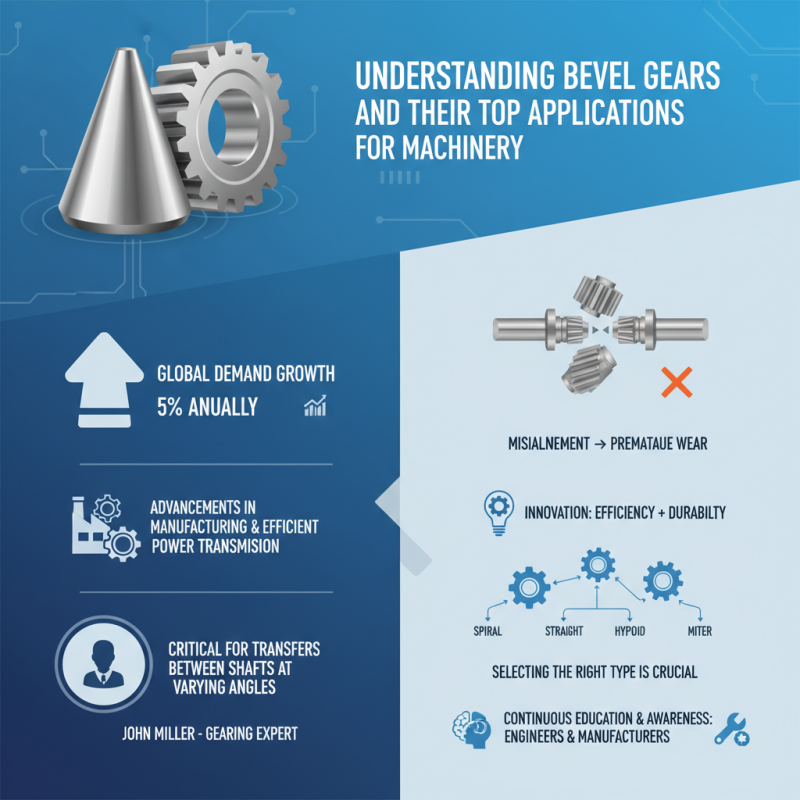
Bevel gears play a pivotal role in machinery and mechanical systems. According to a recent industry report, the demand for bevel gears is projected to grow by 5% annually over the next five years. This growth is largely driven by advancements in manufacturing technology and the rising need for efficient power transmission solutions.
Expert John Miller, a renowned figure in the gearing industry, remarks, "Bevel gears are critical for transfers between shafts at varying angles." The versatility of bevel gears allows for adaptations in various applications. However, understanding their intricacies can be challenging. Misalignment issues could lead to premature wear.
Innovations in design are paramount. Engineers today must balance efficiency with durability. With a plethora of bevel gear types, selecting the right one for specific machinery can be daunting. Mistakes can be costly. Continuous education and awareness are vital for engineers and manufacturers alike.
Understanding the Definition and Functionality of Bevel Gears
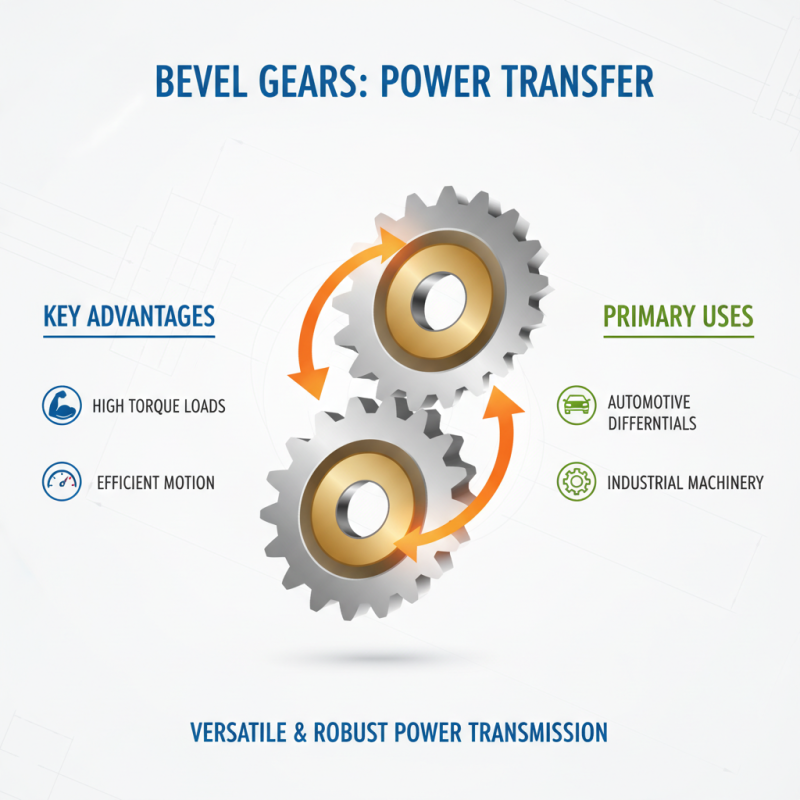
Bevel gears are crucial components in machinery. They are designed to transmit power between shafts that are not parallel. Unlike other gear types, bevel gears can change the axis of rotation. This functionality makes them essential in various applications, from automotive differentials to industrial machines.
In manufacturing, bevel gears are commonly used in conveyor systems. According to industry reports, bevel gear applications account for approximately 25% of the mechanical power transmission market. This statistic highlights their importance in enhancing efficiency. For example, using a 45-degree bevel gear allows seamless transitions in rotation, reducing friction and wear on parts.
However, bevel gears can face some challenges. Precision is key in their design and manufacturing. Small errors can lead to significant inefficiencies and wear. Many companies find that achieving perfect alignment is difficult. Misalignment can lead to premature failure of these gears. This is an ongoing issue within the industry, prompting calls for better manufacturing standards and practices.
Types of Bevel Gears: Straight, Spiral, and Hypoid Variations
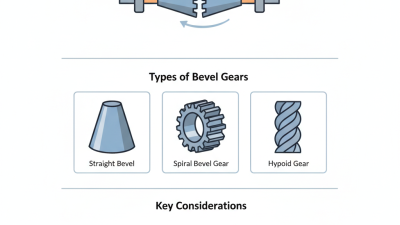
Bevel gears play a crucial role in machinery, allowing for efficient power transmission. These gears come in different types, most notably straight, spiral, and hypoid bevel gears. Each type serves unique functions, making them suitable for various applications.
Straight bevel gears feature straight teeth and connect shafts at 90 degrees. They work best in simple applications. However, their operation can be noisy, especially under heavy loads. This shortcoming puts pressure on engineers to consider alternatives.
Spiral bevel gears have curved teeth, which provide smoother and quieter operation. They can handle more load than straight types. Still, they require precise manufacturing and installation.
On the other hand, hypoid bevel gears also have a curved tooth design, allowing for non-intersecting shafts. This variation offers even greater torque capacity. Yet, they tend to be more complex in design and need careful assembly. Choosing the right gear type involves balancing efficiency, noise levels, and load capacity. Making the wrong choice can lead to increased wear and maintenance costs.
Common Industries Utilizing Bevel Gears in Their Operations
Bevel gears are crucial in various sectors. Their unique design allows them to change the direction of power transmission effectively. Many industries harness the capability of bevel gears to optimize their machinery.
The automotive industry commonly utilizes bevel gears. These components help in transferring power between shafts that are not aligned. For instance, in a differential, bevel gears enable smooth cornering. They enhance vehicle performance and safety. Machinery used in manufacturing also benefits significantly from bevel gears. They provide precise control in conveyor systems and robotic arms.
Tip: Regular maintenance of bevel gears can enhance their lifespan. Lubrication plays a vital role in this process.
In the aerospace industry, bevel gears facilitate critical functions. They manage the orientation of various mechanical systems in aircraft. However, designing these gears can be challenging. Small misalignments may lead to performance issues.
Tip: Invest time in proper training for staff handling bevel gears. Understanding the intricacies can prevent costly mistakes.
Best Practices for Maintenance and Management of Bevel Gears
Bevel gears play a pivotal role in various machinery applications. Proper maintenance is essential for optimal performance. Routine checks can prevent significant issues down the line. A clean environment is crucial. Dust and debris can cause wear over time. Regular cleaning of these gears enhances their lifespan.
Lubrication is another vital aspect. The right lubricant reduces friction effectively. This helps avoid overheating. However, some people neglect this step. This oversight can lead to premature failure. Monitoring lubrication levels is essential to maintain functionality.
Tension alignment must also be checked periodically. Misaligned gears can lead to inefficient operation. Regular inspections can identify these misalignments early. Operators should be aware of unusual sounds or vibrations. These can signal underlying problems that need immediate attention. Adopting these best practices ensures that bevel gears function effectively.