How to Choose the Right Injection Tooling for Your Project?
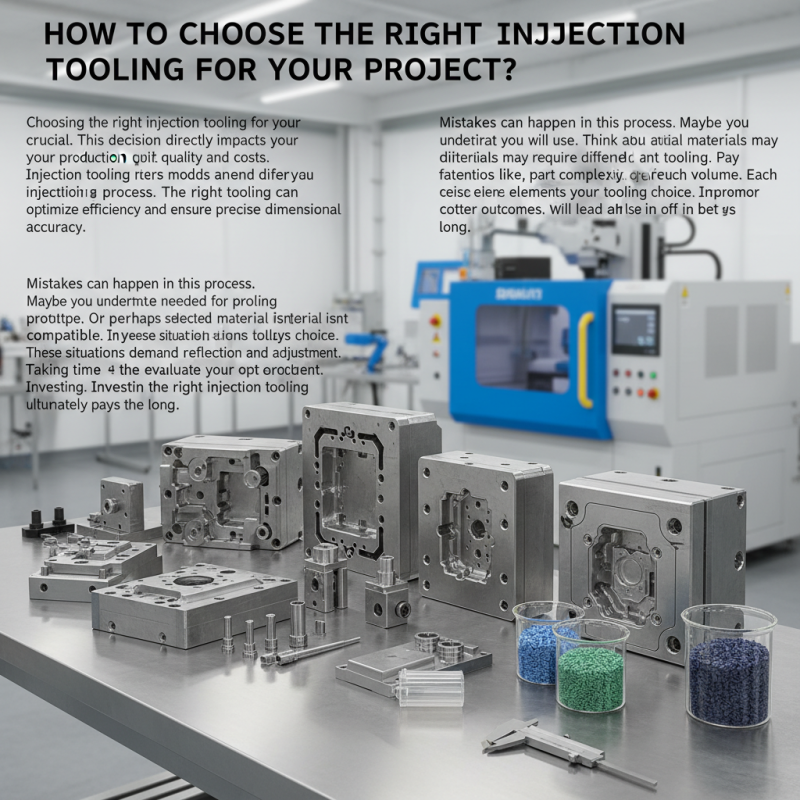
Choosing the right injection tooling for your project is crucial. This decision directly impacts your production quality and costs. Injection tooling refers to the molds and equipment used in the injection molding process. The right tooling can optimize efficiency and ensure precise dimensional accuracy.
Consider your project's specifications carefully. Think about the material you will use. Different materials may require different types of tooling. Pay attention to factors like cycle time, part complexity, and production volume. Each of these elements influences your tooling choice. Improper tooling can lead to costly delays and waste.
Mistakes can happen in this process. Maybe you underestimate the tooling needed for a prototype. Or perhaps the selected material isn't compatible. These situations demand reflection and adjustment. Taking time to evaluate your options will lead to better outcomes. Investing in the right injection tooling ultimately pays off in the long run.
Understanding Injection Tooling and Its Importance in Manufacturing
Injection tooling plays a crucial role in manufacturing. It involves creating molds that shape molten materials into final products. This process can influence the efficiency of production and the quality of the end product. Understanding the details of injection tooling helps manufacturers make better decisions.
Selecting the right tooling requires careful evaluation. Factors like material type, mold complexity, and production volume are significant. Overlooking any aspect can lead to costly mistakes. For instance, a mold designed for a high-precision part cannot be reduced in quality without affecting the final product. Small errors can snowball into larger production issues.
Inadequate planning can often complicate the tooling process. Misjudgments regarding size or material choice may cause delays and increased costs. Addressing these challenges upfront ensures a smoother workflow later. It’s essential to engage with experienced engineers early in the project. Their insights can help identify potential pitfalls and set realistic expectations.
Key Factors to Consider When Selecting Injection Tooling
When selecting injection tooling for your project, several key factors should be evaluated. Costs, material compatibility, and production volume play crucial roles. Understanding your budget helps narrow down your options. It's essential to remember that while cheaper tooling might seem appealing, long-term durability and performance are vital.
Material compatibility is another point to consider. Different materials behave differently during the injection process. For example, thermoplastics typically require specific tooling designs to maintain structural integrity. According to industry reports, the wrong choice can lead to defects in the final product, affecting over 30% of manufacturing efficiency.
Tip: Collaborate with engineers to analyze your project requirements thoroughly. Early discussions help prevent costly mistakes later. Consider your production volume as well. Lower volumes may not justify high-end tooling. Yet, for high-volume projects, investing in quality tooling usually pays off.
In summary, choosing the right injection tooling demands careful thought. Mistakes can lead to delays and wasted resources. A holistic approach to your criteria can lead to better outcomes. Prioritize these considerations to enhance your project's success.
Key Factors in Choosing Injection Tooling
The following bar chart illustrates the key factors to consider when selecting injection tooling, based on their importance as perceived by industry professionals.
Types of Injection Tooling and Their Applications
Choosing the right injection tooling is crucial for any manufacturing project. Different types of tooling offer specific benefits and applications. A common choice is the single-cavity mold. It produces one part per cycle, making it great for prototypes. However, it can be time-consuming for large runs.
Multi-cavity molds increase production rates significantly. These molds produce multiple parts simultaneously. This can lower costs per unit but demands precise design and maintenance. Hot runner systems can improve efficiency by reducing waste. Yet, they require a higher initial investment and skilled setup.
Considering your project's needs is vital. Evaluate factors like production volume and part complexity. There’s often a trade-off between cost and efficiency. Striking a balance can be challenging. Tooling decisions should align with overall project goals. Reflecting on past experiences can help in making better choices. Each project presents unique challenges and learning opportunities.
Evaluating Material Choices for Injection Tooling
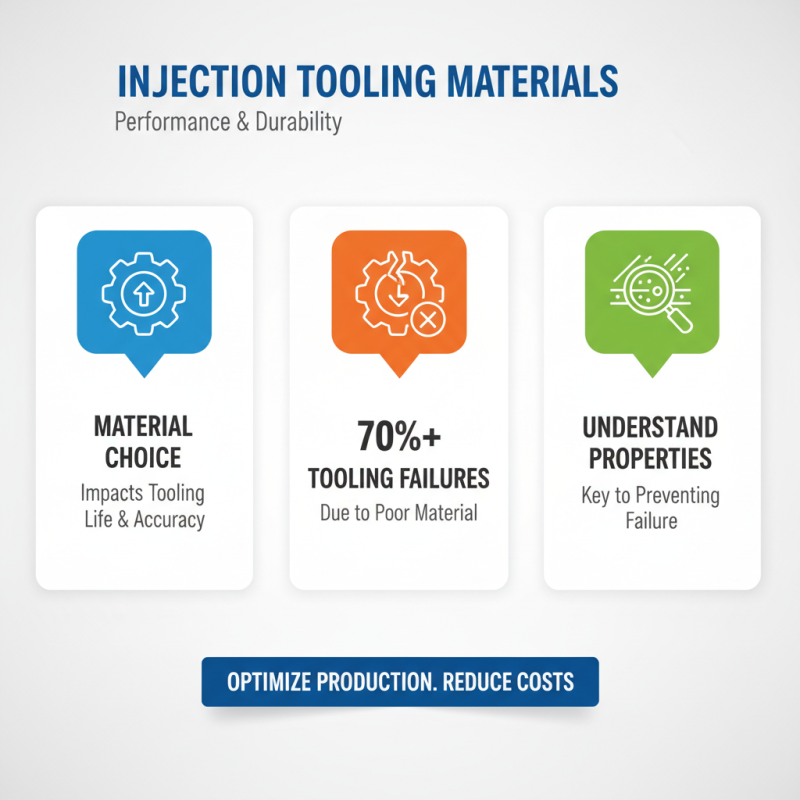
When evaluating material choices for injection tooling, several factors come into play. The performance of the material directly impacts the durability and precision of the tooling. A recent industry report indicates that more than 70% of tooling failures are attributed to inadequate material selection. This highlights the importance of understanding the properties of various materials.
Considerations like thermal stability, impact resistance, and cost are crucial. For instance, high-density polyethylene (HDPE) is favored for its durability in many applications. In contrast, polycarbonate is excellent for clear parts due to its high optical clarity. Each material offers unique benefits, but the project requirements should guide the decision. A mismatch can lead to costly delays.
Tips: Always consult material data sheets. Pay attention to temperature thresholds and mechanical properties. Testing small batches can prevent larger issues later. Use simulations where possible; they can reveal weaknesses before full production. Reflect on how often the tooling will be used. Frequent use requires more robust materials to ensure longevity. The right choice can reduce maintenance and increase efficiency.
Cost Analysis and Budgeting for Injection Tooling Projects
When budgeting for injection tooling projects, a detailed cost analysis is essential. Start by breaking down all project components. Consider materials, design, and manufacturing processes. Each element impacts the overall budget.
Tips: Always factor in unexpected costs. These can include design modifications or delays. Keeping a contingency fund can help mitigate risks.
Evaluate the lifespan of your tooling. High-quality tools may have higher upfront costs. However, they can lead to savings over time. Calculate production volumes to determine the right balance. Overestimating can lead to wasted resources.
Tips: Use simulations to predict performance. This helps refine your budget estimates. Don't overlook maintenance costs. They can accumulate quickly and affect your bottom line.
How to Choose the Right Injection Tooling for Your Project? - Cost Analysis and Budgeting for Injection Tooling Projects
| Parameter |
Description |
Estimated Cost (USD) |
Timeframe (weeks) |
| Material Type |
Type of resin used in the injection process |
$3,000 - $5,000 |
2 - 3 |
| Tooling Complexity |
Number of cavities, cores, and features in the mold |
$10,000 - $50,000 |
8 - 16 |
| Production Volume |
Expected units to be produced |
$2,000 - $8,000 |
4 - 6 |
| Finish Quality |
Surface finish requirement of the final product |
$1,000 - $5,000 |
3 - 5 |
| Design Changes |
Adjustments made during the design phase |
$500 - $3,000 |
2 - 4 |