What is the Super Finishing Process and its Benefits for China Top Manufacturers?
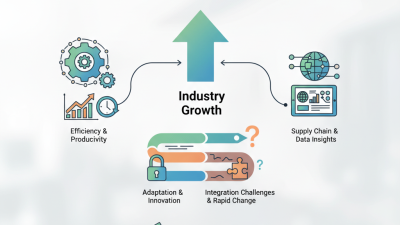
The super finishing process represents a significant leap in manufacturing precision. This advanced technique enhances surface quality and reduces friction, which are crucial for industries like automotive and aerospace. According to a report by MarketsandMarkets, the global superfinishing market is expected to grow at a CAGR of 5.1% from 2022 to 2027. This growth reflects a rising demand for high-quality components.
In China, leading manufacturers are adopting the super finishing process to meet international standards. This technique ensures that parts have an exceptional finish and longer lifespan. However, implementation can be costly and requires skilled technicians. Many manufacturers need to continuously assess their processes to avoid inefficiencies.
Despite its advantages, the super finishing process is not without challenges. Many factories face difficulties in maintaining consistency. Failing to address these issues can lead to product recalls and client dissatisfaction. As manufacturers strive for excellence, embracing the super finishing process will be essential for staying competitive in the global market.

Overview of the Super Finishing Process in Manufacturing
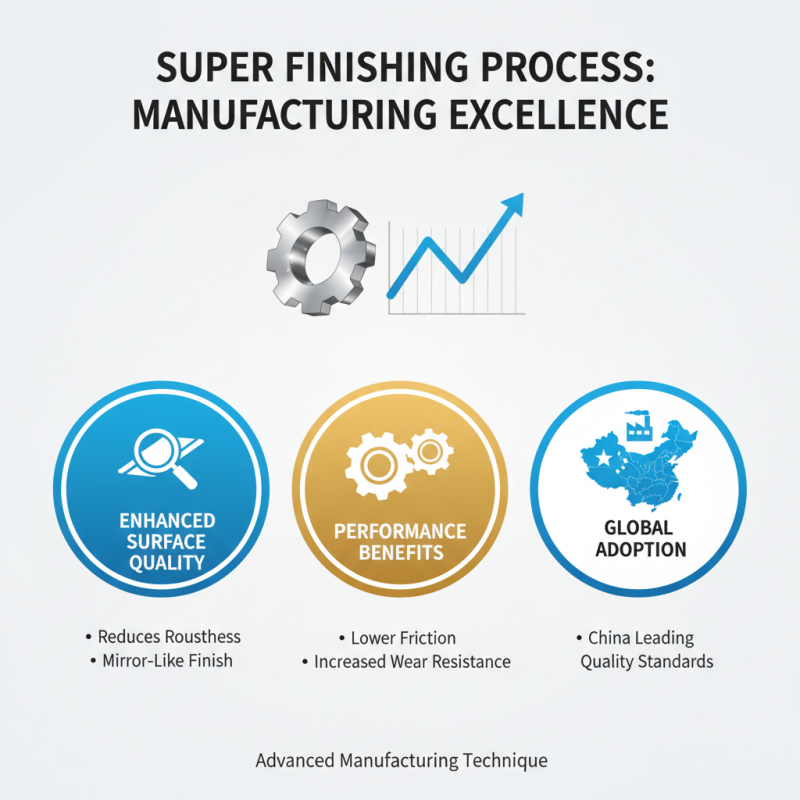
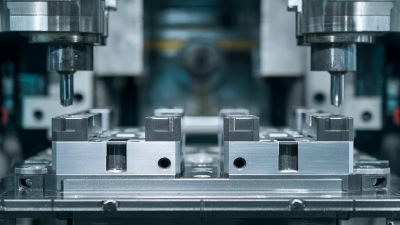
The super finishing process is a critical technique used in advanced manufacturing. It enhances the surface quality of various components. This method helps reduce friction and increases wear resistance. Manufacturers in China have increasingly adopted this process to meet global quality standards.
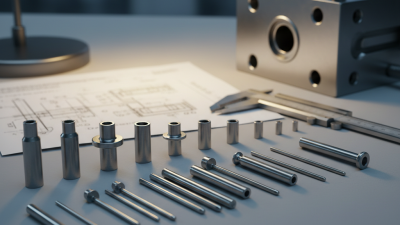
In essence, super finishing involves using specialized tools to refine the surface of a product. This technique can significantly improve precision in parts like gears, shafts, and bearings. The result is not just visual enhancement; the performance of these components is notably improved. Manufacturers often find a balance between cost and quality.
Despite its advantages, the super finishing process has its challenges. It requires skilled operators who understand the nuances of the technique. Not every factory can implement this process efficiently. There may be inconsistencies in outcomes, leading to potential waste. Manufacturers must reflect on their methods to ensure optimal results.
Key Techniques and Technologies Used in Super Finishing
Super finishing is a precise process that enhances the surface quality of manufactured parts. This technique eliminates imperfections and improves dimensional accuracy. In China, top manufacturers leverage super finishing to meet stringent industry standards. The result is components with enhanced durability and performance.
Key techniques in super finishing include the use of specialized abrasives and advanced equipment. The process often involves the application of finer abrasive grains. This ensures a smoother finish, reducing friction and wear during operation. Additionally, innovative technologies like ultrasonic waves and polishing fluids have emerged. These advancements allow for higher precision and efficiency in finishing operations.
Tips: Regularly assess the effectiveness of your finishing process. Small adaptations can lead to profound improvements. Stay updated on technological advancements for super finishing. This industry evolves rapidly, and being informed can set your business apart.
Super Finishing Process and Its Benefits
This chart illustrates the benefits of the super finishing process, highlighting significant improvements in surface quality metrics such as surface roughness reduction, enhanced shine, increased durability, and overall cost efficiency. These metrics are vital for manufacturers maximizing product performance.
Advantages of Super Finishing for Top Manufacturers in China
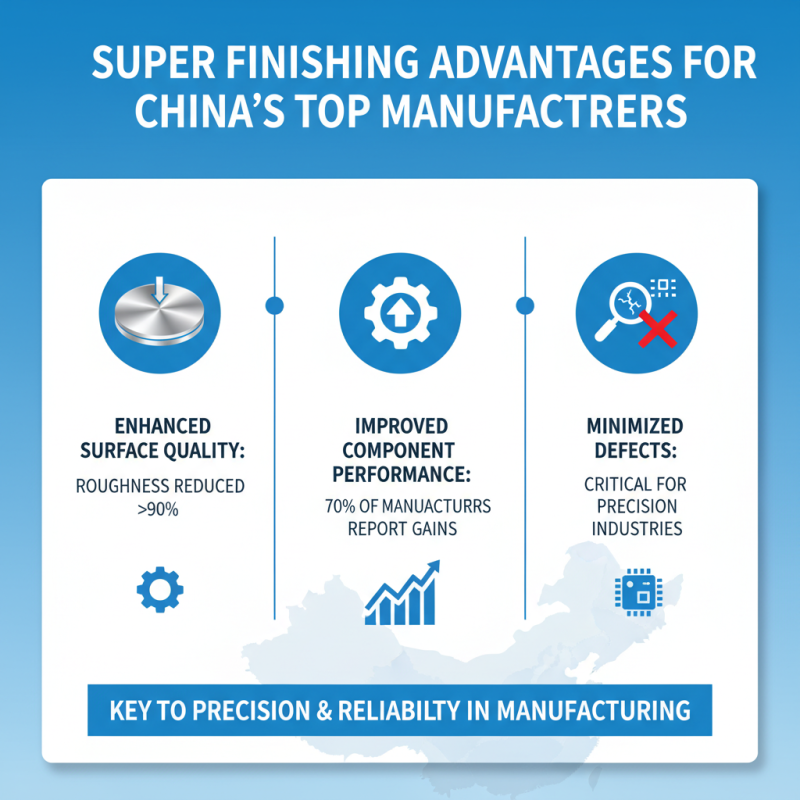
The super finishing process has gained traction among top manufacturers in China due to its unique advantages. This technique significantly enhances surface quality, reducing roughness by over 90%. Reports indicate that nearly 70% of manufacturers integrating super finishing see improved performance in their components. In precision industries, even minor surface imperfections can lead to failure. Thus, adopting this process offers a considerable edge.
By achieving finer tolerances, manufacturers can reduce friction and extend the lifespan of mechanical parts. According to industry surveys, companies using super finishing report a 30% increase in efficiency. This is crucial in sectors like automotive and aerospace, where reliability is paramount. However, not all manufacturers fully embrace this technology. The initial investment and lack of expertise can deter some.
Tips: Invest in training your team to maximize the effectiveness of super finishing. Collaborate with experts for insightful guidance. Also, regularly assess your current processes to identify areas for super finishing integration. Maintaining a balance between cost and benefits is essential for long-term success.
Impact of Super Finishing on Product Quality and Performance
The super finishing process plays a crucial role in enhancing product quality, especially for top manufacturers in China. This technique involves refining surfaces to achieve a high level of smoothness and precision. The result is improved surface finish, leading to better performance of mechanical components. It's essential in industries where precision matters, such as aerospace and automotive.
A smoother surface means reduced friction, which can enhance efficiency. With super finishing, products experience less wear and tear. Manufacturers report that super finishing can extend product life. However, it requires specialized equipment and skilled personnel. Not all manufacturers can implement these processes easily.
While the benefits are clear, the implementation can be challenging. Some companies may overlook the need for training or precise control during the process. These oversights can lead to inconsistent quality. Finding the right balance between cost and quality is often complicated. Investing in super finishing could mean higher upfront costs but potentially offers greater long-term gains. Properly executed, super finishing not only improves performance but also elevates the reputation of manufacturers in a competitive market.
What is the Super Finishing Process and its Benefits for China Top Manufacturers?
| Dimension |
Description |
Benefits |
Impact on Quality |
| Process Type |
Super Finishing |
Enhanced Surface Finish |
Improved Aesthetic Appeal |
| Applications |
Automotive, Aerospace, Medical |
Reduced Wear |
Longer Product Lifespan |
| Machinery Used |
Super Finishing Machines |
Precision Manufacturing |
Consistency in Quality |
| Key Benefits |
Increased Durability |
Lower Friction Coefficient |
Enhanced Performance |
| Environmental Impact |
Reduced Waste |
Eco-Friendly Processes |
Sustainable Manufacturing |
Future Trends and Developments in Super Finishing Methods
The super finishing process is evolving rapidly. Manufacturers in China are adopting new techniques to enhance product quality. This method focuses on achieving ultra-smooth surfaces that reduce friction and wear. Key benefits include improved durability and performance.
Recent trends indicate a shift towards automation in super finishing. Advanced machinery offers higher precision and consistency. However, integrating these technologies can be challenging. Training personnel to operate complex machines requires time and investment. Manufacturers face the delicate balance of costs versus benefits.
Sustainability is another critical trend. Eco-friendly materials and energy-efficient processes are becoming more prevalent. Manufacturers must rethink their approaches to meet environmental standards. The push for innovation in super finishing may lead to breakthrough methods that blend efficiency with sustainability. Adapting to these future trends is essential for remaining competitive in an ever-changing market.