Top 10 Surface Finishing Processes for Global Buyers?
In the competitive world of manufacturing, selecting the right surface finishing process is crucial. Surface finishing not only enhances the aesthetic appeal of products but also improves durability and performance. Different processes serve various materials and applications, leading to a complex landscape for global buyers.
Exploring the top ten surface finishing processes is essential for informed decision-making. Each method offers unique benefits and challenges. Buyers must weigh factors such as cost, efficiency, and quality. Understanding these processes is key to maintaining a competitive edge in the market.
However, not all surface finishing solutions fit every project. Some choices may lead to unexpected issues. Therefore, evaluating each option carefully is paramount. Knowledge of these processes will empower buyers to optimize their supply chain and deliver superior products.
Overview of Surface Finishing Processes in the Global Market
Surface finishing processes play a vital role in manufacturing. They enhance the appearance and durability of products. There is a diverse range of techniques available in the global market. Common methods include polishing, plating, and coating. Each technique has its unique benefits and drawbacks.
Polishing can create a smooth surface, but it may not always be effective for intricate designs. Plating offers protection against corrosion, yet its environmental impact requires consideration. Coating methods, like powder coating, provide a robust finish. However, achieving uniformity can be challenging.
Buyers must navigate these complexities when choosing a method. Industry standards and customer demands often drive these decisions. Understanding current trends can help buyers make informed choices. It's crucial to stay updated with emerging technologies and sustainable practices. This knowledge can lead to better outcomes in product quality and environmental responsibility.
Key Factors Influencing Surface Finishing Process Selection
When selecting a surface finishing process, several factors come into play. The
material type is significant. Different materials require unique finishing methods.
Metals may need polishing or anodizing, while plastics can benefit from painting or coating. Choosing the right process
enhances durability and appearance.
Cost is another crucial element. Companies often seek affordable solutions without compromising quality.
Understanding how each finishing process affects pricing is essential for budget planning. For instance, some techniques
may require specialized equipment or skilled labor, driving up costs.
Environmental impact cannot be ignored. As regulations
tighten, buyers must consider eco-friendly options. Processes that generate hazardous waste or high emissions may lead
to future liabilities. Sustainability practices are not just trends; they are becoming necessary for compliance and
public perception. Balancing these factors requires thoughtful analysis and sometimes trial and error.
Top 10 Surface Finishing Techniques: A Detailed Analysis
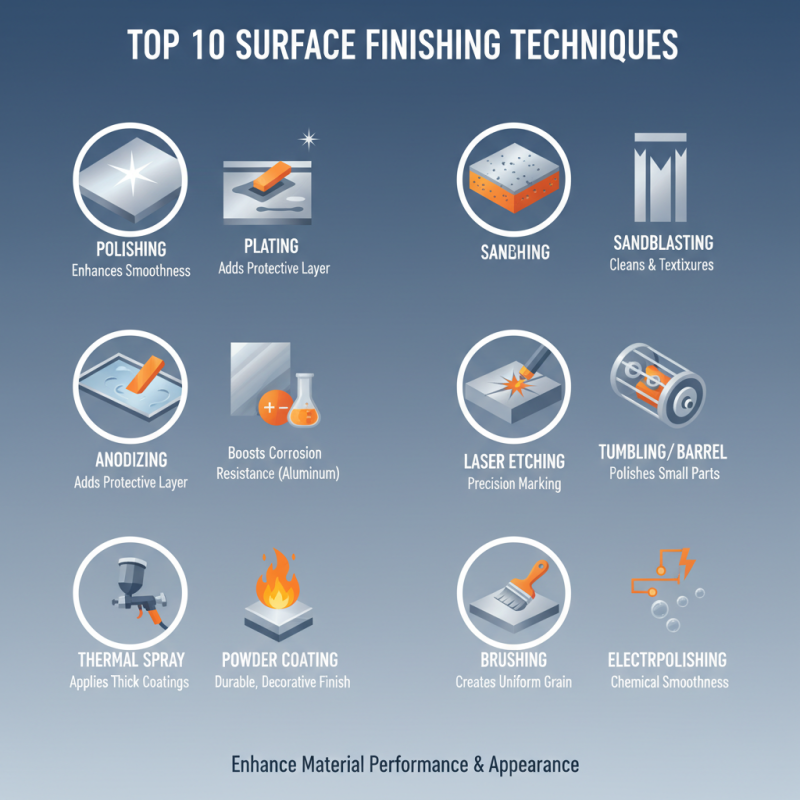
Surface finishing processes play a crucial role in enhancing the appearance and performance of materials. Different techniques are employed based on the specific requirements of products. Some finish techniques include polishing, plating, and anodizing, each offering unique benefits. Polishing can improve surface smoothness significantly, while anodizing increases corrosion resistance in aluminum products.
However, achieving the desired finish can be challenging. The choice of materials impacts the effectiveness of the finishing technique. For example, some metals may not respond well to certain plating methods. This variability requires careful consideration and often trial and error. Additionally, environmental factors can influence the consistency of surface finishes, leaving room for improvement in quality control measures.
Professionals need to stay updated on advancements in finishing techniques. New methods may offer better results or reduced environmental impact. Continuous learning is essential in this field, as reliance on outdated methods may lead to suboptimal outcomes. Embracing innovation can make a significant difference in achieving superior surface finishes, ultimately enhancing the competitiveness of products in the global market.
Benefits of Surface Finishing in Various Industries
Surface finishing processes play a critical role in various industries. They enhance the durability and appearance of products. These processes include polishing, plating, and coating. According to a recent market analysis report, the global surface finishing market is projected to reach $16 billion by 2025. This highlights the growing significance of improving product quality.
In automotive and aerospace sectors, surface finishing improves resistance to corrosion and wear. A well-finished surface can extend a product's lifespan by up to 50%. Industries are increasingly adopting these techniques to meet stringent quality standards. However, achieving optimal surface finish remains a challenge. Variability in materials can lead to inconsistent results. The focus on developing advanced techniques is critical in overcoming these obstacles.
Moreover, the electronics industry benefits substantially from surface finishing. It ensures proper functioning and longevity of electronic components. For instance, electroplating enhances electrical conductivity, essential for device performance. However, the environmental impact of certain finishing processes requires careful consideration. Companies must navigate regulations and seek sustainable solutions. Balancing quality and responsibility in surface finishing is essential for future advancements.
Top 10 Surface Finishing Processes for Global Buyers
| Process |
Industry Use |
Benefits |
Material Compatibility |
| Electroplating |
Automotive, Electronics |
Corrosion Resistance, Aesthetic Appeal |
Metals, Plastics |
| Anodizing |
Aerospace, Consumer Goods |
Enhanced Durability, Lightweight |
Aluminum |
| Powder Coating |
Manufacturing, Appliances |
Environmental Safety, Variety of Colors |
Metals |
| Sandblasting |
Construction, Shipbuilding |
Surface Preparation, Texturing |
Metals, Wood |
| Painting |
Automotive, Industrial Equipment |
Aesthetics, Protection from Elements |
Metals, Plastics |
| Vapor Degreasing |
Aerospace, Electronics |
Effective Cleaning, Non-Damaging |
Metals |
| Laser Engraving |
Custom Products, Electronics |
Precision, Customization |
Metals, Plastics, Wood |
| Chemical Etching |
Electronics, Medical Devices |
High Precision, Complex Designs |
Metals |
| Buffing and Polishing |
Jewelry, Automotive |
Luster, Surface Smoothness |
Metals |
| Hydrophobic Coating |
Electronics, Aerospace |
Water Resistance, Easy Cleaning |
Metals, Glass |
Future Trends in Surface Finishing Technologies and Practices
In recent years, surface finishing technologies have evolved rapidly, driven by industry demands for enhanced performance and aesthetics. Advanced techniques such as 3D printing and laser finishing are gaining traction. These methods enable precision and reduce waste, but they also introduce new challenges. For instance, maintaining quality control when integrating these technologies remains a concern. Many companies are still learning to adapt to these changes.
Sustainability is another key focus in surface finishing. Businesses are increasingly adopting eco-friendly practices. Water-based coatings and biodegradable materials are becoming popular. They reduce environmental impact, yet scaling these practices can be difficult. Some manufacturers are hesitant to fully embrace these shifts due to potential cost implications.
Moreover, automation and smart technologies are transforming the landscape. The use of AI and machine learning enhances process efficiency. However, there’s a knowledge gap that must be addressed. Many professionals lack the necessary training to use these advanced systems. This can hinder the industry's growth as it strives for innovation while navigating these complex challenges.
Top 10 Surface Finishing Processes for Global Buyers
This chart illustrates the market share distribution among the top 10 surface finishing processes employed by global buyers. Each of these processes plays a crucial role in enhancing the surface characteristics of various materials.